Delaware and Tri-Valley League Collaboration
FOR IMMEDIATE RELEASE
Delaware and Tri-Valley Leagues Announce Collaborative Athletic Framework
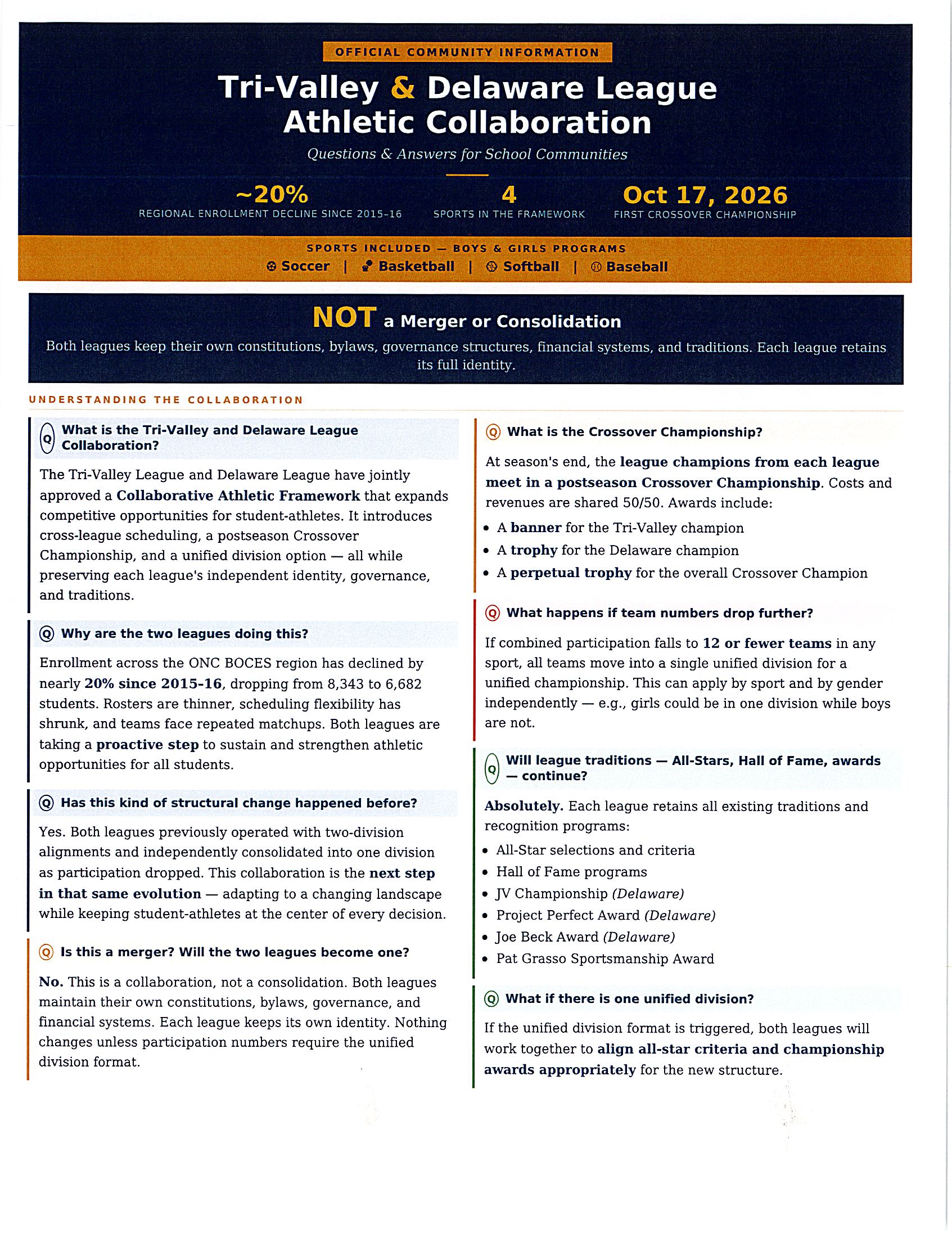
In response to ongoing regional enrollment and athletic participation declines and their growing impact on interscholastic athletics, the Delaware League and the Tri-Valley League have jointly and unanimously approved a new Collaborative Athletic Framework designed to expand competitive opportunities for student-athletes while preserving each league’s independent identity.
Developed through a series of discussions among league athletic directors and superintendents, the framework addresses shared challenges including reduced team rosters, limited scheduling flexibility, and the need for long-term program sustainability.
A Proactive Response to Regional Change
Enrollment across the ONC BOCES region has declined by nearly 20% since the 2015–16 school year, dropping from 8,343 students to 6,682 today. This shift has directly affected athletic participation, with many programs experiencing thinner rosters and fewer competitive opportunities.
Rather than reacting after further decline, both leagues are taking a proactive approach, working together now to strengthen athletic opportunities for all students in the region.
Collaboration—Not Consolidation
This initiative is a collaboration, not a consolidation. Both the Delaware and Tri-Valley Leagues will maintain their own constitutions, by-laws, governance structures, and financial systems. League traditions and programs in both leagues will remain unchanged.
Sports Included
The collaborative structure will apply to both boys and girls programs in four major sports: Soccer, Basketball, Softball, and Baseball.
Unified Division
If participation in any girls or boys team sport falls to 12 or fewer teams across both leagues, all teams will be combined into a single division and compete in a full schedule against one another for a unified championship. This format can be implemented in the same sport, in the same season, exclusive of gender. For example, depending on numbers, girls could potentially be one division while boys are not.
Framework Structure
The collaboration introduces several key structural elements:
1. League Play Maintained: Schools will continue to compete within their respective leagues to determine regular season league champions.
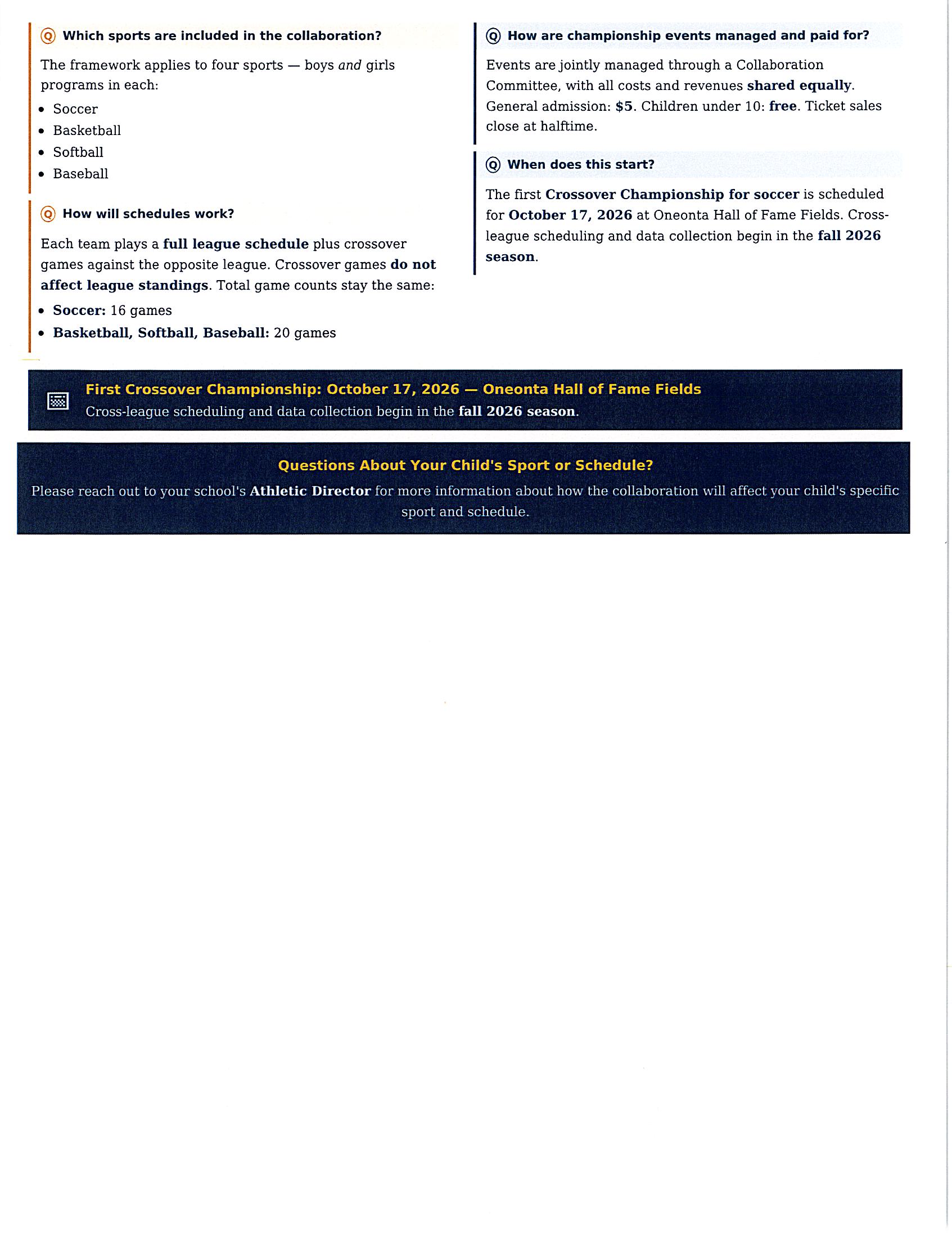
2. Cross-League Scheduling: Each team will play a designated number of games against schools from the opposite league; these contests will not impact league standings.
3. Crossover Championship: Regular season champions from each league will compete in a postseason Crossover Championship.
Key Benefits of the Framework
● Expanded Competition: Over a 3–4 year cycle, teams will compete against all schools from both leagues, significantly increasing the variety of opponents.
● Improved Scheduling: Athletic directors will have access to a broader pool of teams, reducing repetitive matchups and enhancing season structure.
● Preserved Traditions: Each league retains its unique identity and historical programs.
● Shared Resources: Championship events and related logistics will be jointly managed and funded through a Collaboration Committee.
Looking Ahead
This collaborative effort reflects a shared commitment to adapting in a changing environment while prioritizing student experience. By expanding competition, improving scheduling, and maintaining valued traditions, the Delaware and Tri-Valley Leagues are working together to build a sustainable and vibrant future for interscholastic athletics in the region.